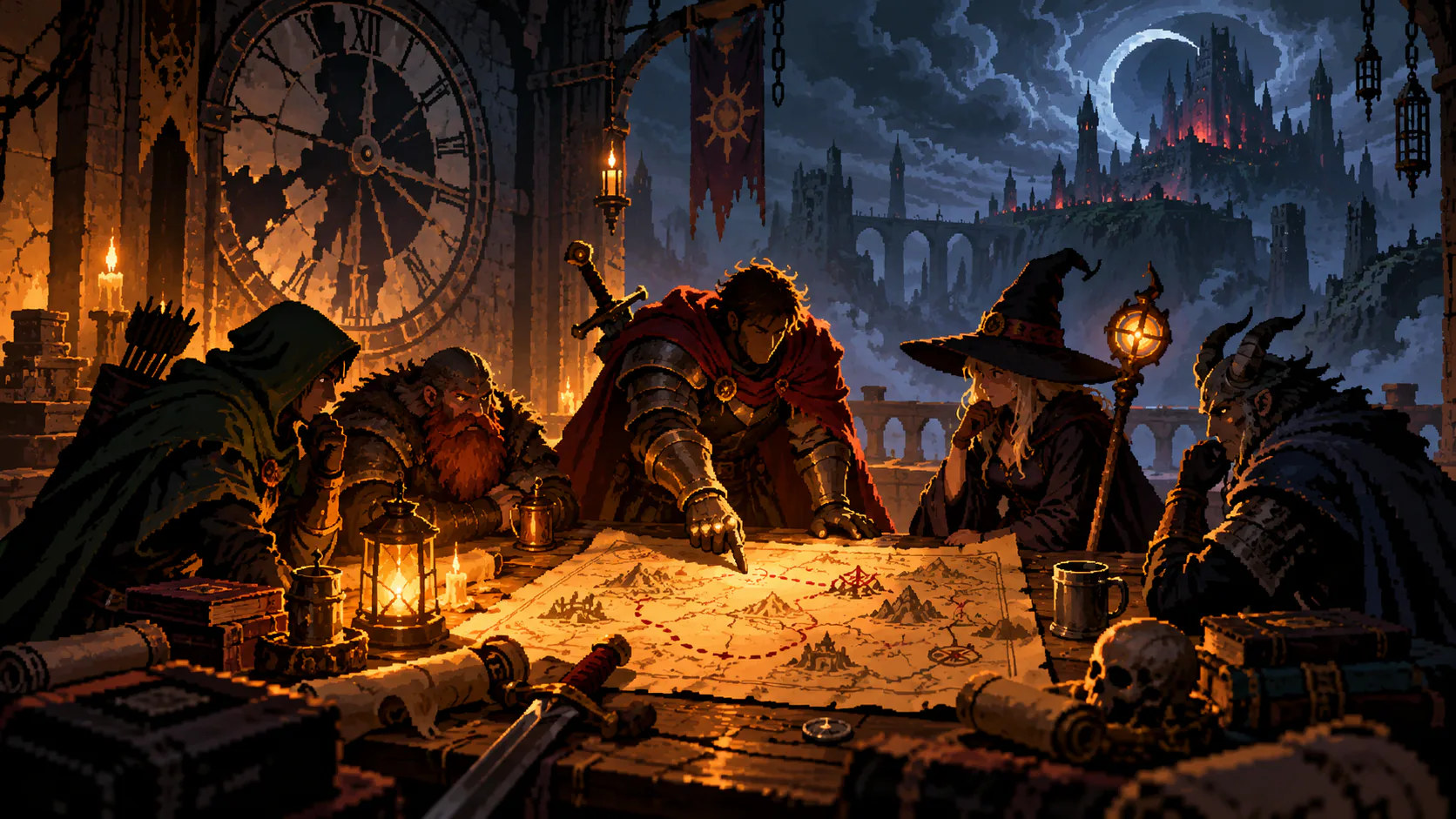
Doomward: Dungeon Autobattler makes preparation the main event: recruit and configure a guild, set each hero’s rules and marching order, then choose a route while the Doom Clock advances. The game released on Steam on October 21, 2026. Mire Studios says its Official Tutorial walks new players through a first expedition; these six checks build on that primer and the studio’s Gameplay Overview.
What to know before your first expedition
You do not control each hero’s attacks directly. Instead, you set up the party and its behavior, then see whether that plan holds when combat starts. The official description warns that death is permanent and there are no revives. Use the tutorial to learn the expedition flow, then focus on how your instructions, status effects, and route choices fit together rather than chasing a supposedly perfect party.
1. Write the heroes’ rules before you chase a perfect roster
Before an expedition, read each hero’s ordered rules from top to bottom. Check target priority, when a powerful ability should be held, and the condition for using a potion—the studio lists all three as examples. Make the priorities express one clear plan; if you revise the setup, change one rule at a time so you can see what that adjustment affects.
2. Pair status effects instead of building around isolated attacks
When reviewing the heroes available to you, look for a setup-and-follow-up pair: the studio gives “Chill, then freeze and shatter” and “Oil, then ignite” as examples. Check the ability descriptions to confirm which effect each hero applies and which one can exploit it. For a first expedition, prioritize a pair your available heroes can actually create and exploit.
3. Check marching order alongside behavior rules
Review marching order alongside the behavior rules before you launch. Trace the sequence you want: which hero applies the opening state, which hero should exploit it, and whether your chosen order supports that plan. The official battle-rules screenshot shows configurable priorities; use it to understand the system, not as a guaranteed winning template.
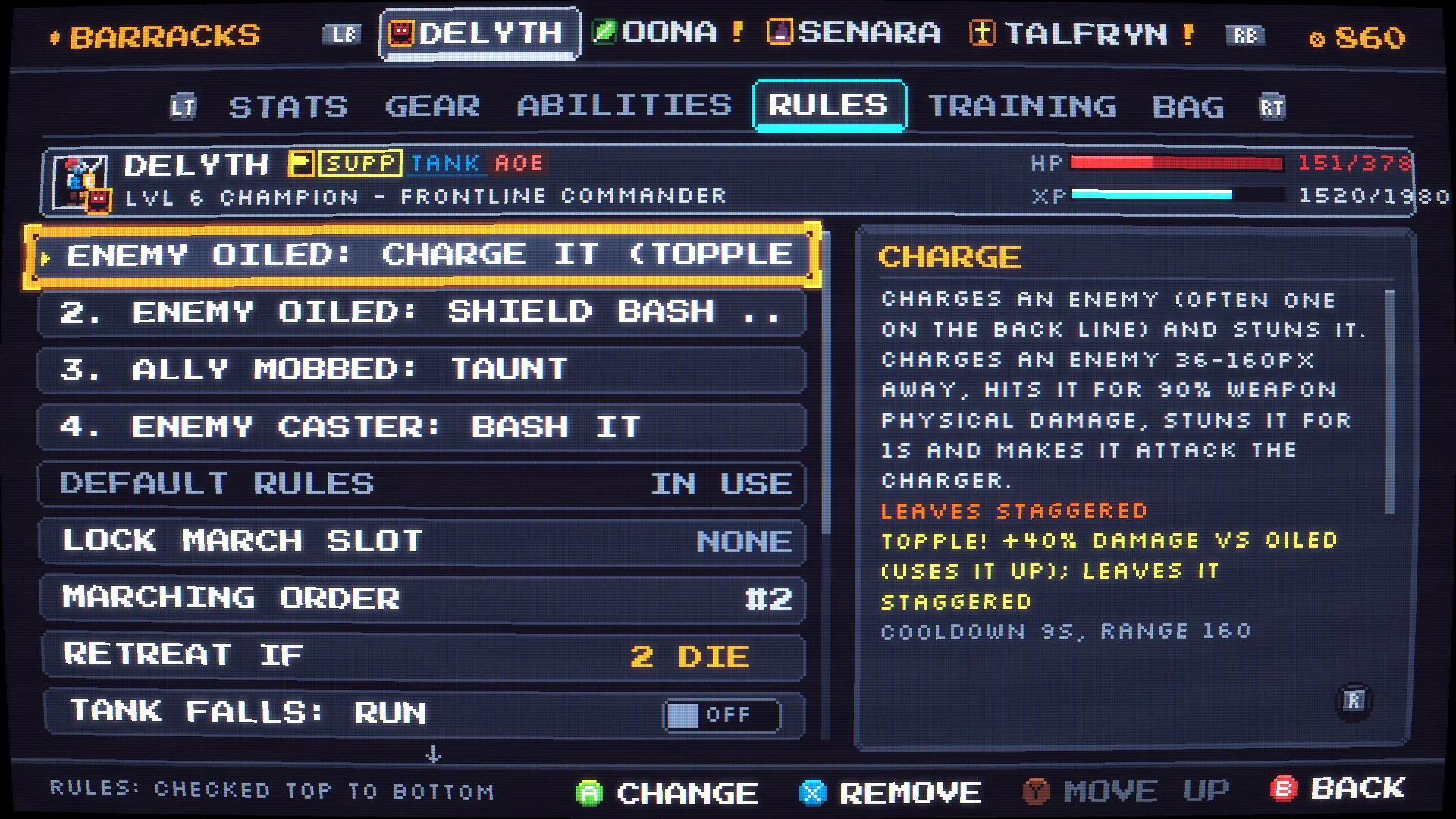
Image credit: Mire Studios
4. Price each route against the Doom Clock
Before choosing a route, compare its listed weather, traps, and enemies with what your guild is prepared to face. Every expedition spends Doom; longer trips pay more but consume more of the clock. At a fork, weigh the destination’s stated reward against that cost and risk instead of choosing the longest or richest-looking option by default.
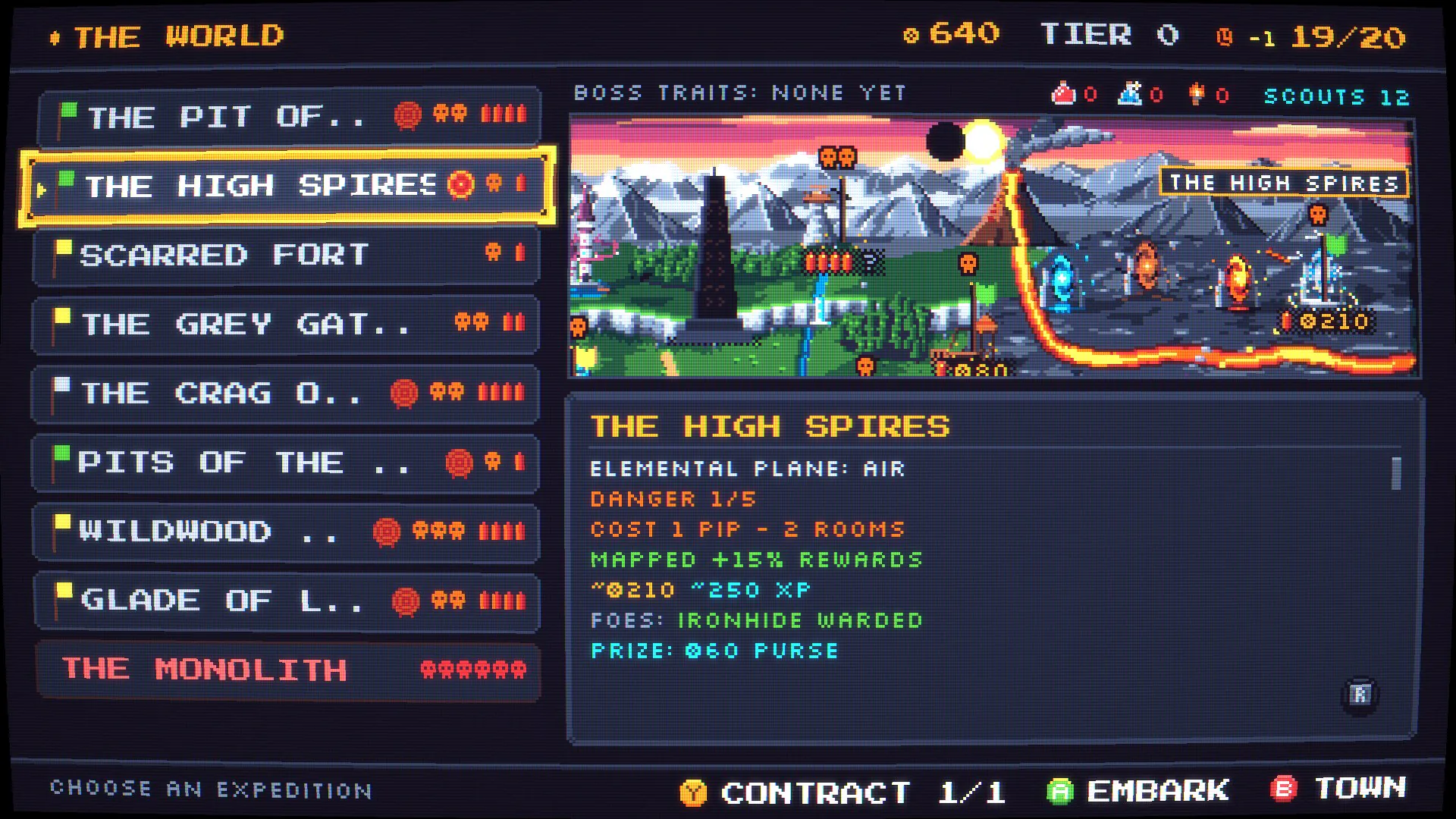
Image credit: Mire Studios
5. Treat the siege and permanent death as real constraints
The Doom Clock advances as expeditions consume Doom, and Harbingers eventually lay siege to the town. Mire Studios says a lost siege ends the run; it also states that hero death is permanent, with no revives. Before taking an optional detour, check the clock and ask whether its reward is worth spending more of the time available. The studio publishes no universal safe clock threshold, so do not treat a particular number as a guaranteed cutoff.
6. Read a contract before you commit to its bet
Mire Studios confirms that contracts let you bet on how an expedition will go, but its public description does not spell out every bet term or payout. Read the exact in-game wording before committing, and make sure you understand what outcome the bet concerns. Do not assume a fixed wager, reward, or penalty beyond what the contract itself shows.
If you are playing co-op
Co-op supports two to four players, with a guild for each player but one shared Doom Clock and map. Players vote on where to go, according to the official description. Agree on a route priority before a vote: one player’s optional detour spends from the same clock everyone is managing. The game also lists solo play, so the shared-clock advice applies only when you choose co-op.
A simple first-run checklist
Before you launch, make sure you can answer five questions: What should each hero do first? Which status effect is meant to set up another? Does the marching order support that plan? What does the next route cost in Doom and risk? And, if you accept a contract, what exact outcome are you betting on?
Those checks will not guarantee a win, especially in a game that explicitly uses permanent death. They do give you a way to learn from the run: change the rule, party interaction, or route that caused trouble instead of treating every loss as bad luck. Recheck the live Steam listing and Mire Studios’ game page for the current feature descriptions; details here were checked on October 22, 2026.