Quick answer
Lilith describes Rise of Kingdoms as taking place on a large shared map: scouts explore fog and investigate map context, while deployed troop groups can receive orders against different targets. That does not create one universal scouting route or march order. Use the live client to identify the current target, action, requirement, and available capacity before copying a route or setup.
If you need wider first-session context before focusing on map systems, start with our Rise of Kingdoms beginner guide. This guide focuses only on understanding the map, scouting, and troop-movement layer without turning it into a commander, gathering, or alliance plan.
How the Rise of Kingdoms map is structured
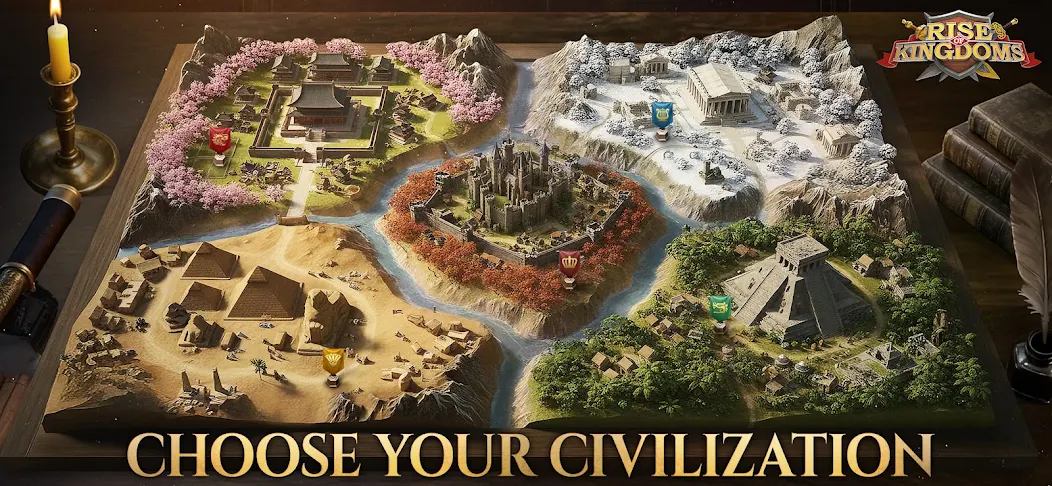
Lilith’s current Google Play description presents Rise of Kingdoms as a large shared map inhabited by players and NPCs. It describes movement between a wider world view and individual cities or barbarian outposts rather than isolated battle screens.
That is the useful orientation point: the map is a shared system with different locations and actions, not one checklist that every new account completes in the same order.
Shared world, cities, NPCs, terrain, and passes
The official description names cities, NPCs, barbarian outposts, natural terrain such as rivers and mountain ranges, and strategic passes. It says passes must be captured to enter neighbouring regions.
For a beginner, this explains that terrain and map boundaries can matter. It does not establish an alliance strategy, territory priority, pass-capture recommendation, or route. Read the current map context and target details before assuming that a location has the same purpose as another one.
Scouting, fog, and map information
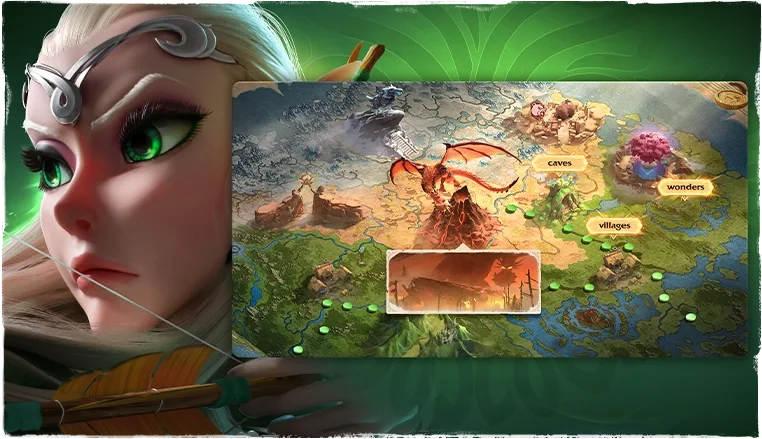
Lilith describes the world as covered in fog and tells players to dispatch scouts to explore it. The same official description mentions investigating locations such as lost temples, barbarian fortresses, mysterious caves, tribal villages, and enemy information.
Scouting is therefore an information-and-exploration system in the official description. It is not the same thing as sending troops to act on a map target.
What official materials say scouts do
The current official listing supports three cautious points:
- The map can be fog-covered.
- Scouts can be dispatched to explore that fog.
- Investigation can reveal map context associated with named locations or enemy intelligence.
These points help a new player recognise why a scout-related prompt differs from a troop-deployment prompt. They do not prove an exact scouting interface, scout count, timer, first target, or current reward table.
What scouting does not prove about rewards or priority
No reviewed official source establishes one universal first scouting target. Use the live client’s current prompts and target details rather than copying an unsupported route.
In particular, the existence of fog, caves, villages, temples, fortresses, or passes does not by itself prove that one should be visited first or that it guarantees a particular current reward. Those outcomes can be version-, region-, account-, or activity-dependent and need direct current confirmation before they belong in a practical recommendation.
Marches and troop movement: the orientation layer
In this guide, “march” is used as plain-language shorthand for a deployed troop group acting on the map. The reviewed current official material describes troops receiving orders and acting against map targets, but it does not provide a rigid technical definition, current slot count, or dispatch walkthrough. The live client should remain the authority for the exact terminology and controls on your account.
Orders, targets, and simultaneous actions
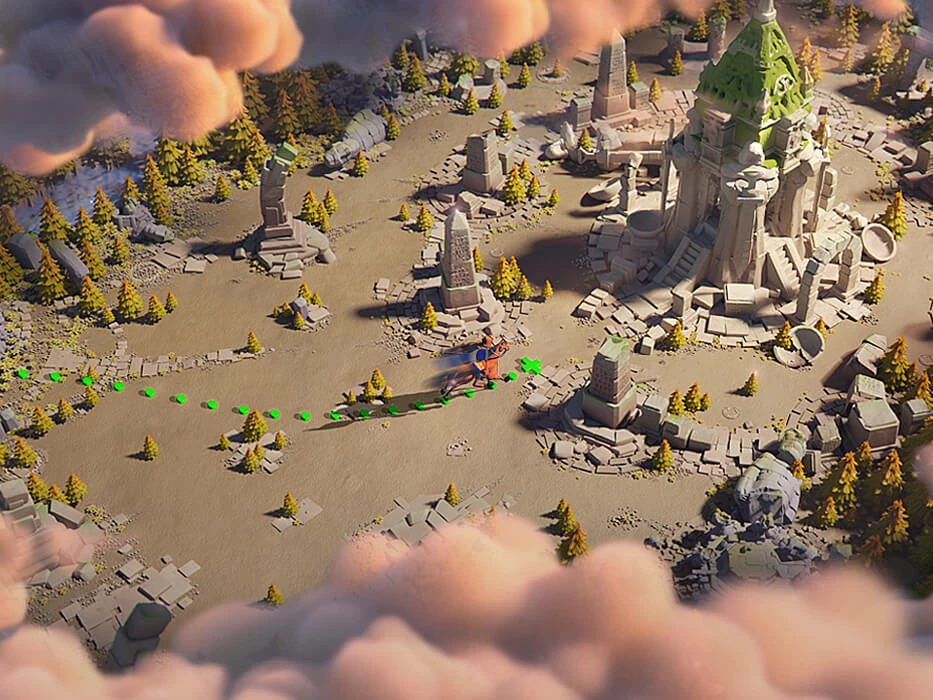
Lilith’s official listing says new orders can be issued to troops on the map. Its examples include an enemy city, an alliance army, nearby lumber, and barbarian clans. It also says forces can be split between multiple commanders for simultaneous actions.
That supports the broad idea that different deployed troop groups can be involved in different map actions. It does not tell a beginner how many groups to use, which target to select first, how to divide troops, or which commander should lead them.
| Surface or concept | What the reviewed official material supports | What this guide does not turn it into |
|---|---|---|
| Scouting | Exploring fog and investigating map context. | A fog-clearing route or reward priority. |
| Deployed troop group / “march” | Troops can receive map orders and act against different targets. | A fixed composition, slot count, speed build, or target sequence. |
| Map target | Cities, NPC/barbarian context, resources, passes, and investigated locations are part of the official map description. | One universal kind of objective or action. |
| Simultaneous actions | The listing describes forces split between multiple commanders for multiple actions. | A rule that every available troop group should always be active. |
Why current capacity and controls must be read in the client
The current official feature description does not document an exact march-capacity number, unlock level, troop split, travel timer, dispatch sequence, return/recall procedure, or target condition. Those details are too volatile to reconstruct from an old guide or general community advice.
Before acting, read the current client’s target and action details. This is particularly important if a guide uses a map label, button name, return instruction, capacity claim, or fog outcome that you do not see in your own version.
Map targets are not one system
The official listing gives examples of several map contexts: cities, NPCs or barbarian activity, resource collection, passes, and locations that scouts can investigate. Those examples should not be treated as interchangeable.
A resource point can raise a gathering question; a city or NPC context can raise a different action question; a pass is terrain and access context; and an investigated location is part of scouting context. This article does not choose a commander, troop type, resource, route, or priority for any of them.
Keeping those distinctions clear prevents a movement guide from quietly becoming a gathering build, an alliance guide, or a PvP target list.
What should you scout first?
No reviewed official source establishes one universal first scouting target. Use the live client’s current prompts and target details rather than copying an unsupported route.
If a current prompt introduces fog or a scout-related action, identify what information it presents and what the client asks you to do. Do not assume that an older fog-clearing path, a cave/village tip, or a claimed reward applies to your current map and account.
Should you use all your marches immediately?
No reviewed official source supports a universal yes-or-no answer. Lilith describes multiple simultaneous actions, but that is a system capability, not an instruction that every available troop group should always be active.
Check the current objective, target details, available capacity, and the distinction between scouting and troop deployment before making that decision. A movement mechanic does not become a commander, gathering, or resource-priority recommendation on its own.
Common map and scouting misunderstandings
These are GoldCrit editorial safeguards, not publisher-issued warnings:
- Treating every visible map target as the same kind of objective. Cities, resources, NPC/barbarian activity, passes, and investigated locations can raise different questions.
- Treating scouting and troop deployment as the same system. Official material presents scouts exploring fog and troops receiving map orders; neither description replaces the live client’s action details.
- Copying an old fog-clearing route. Current controls, target rules, and outcomes may not match a previous guide or version.
- Turning movement mechanics into commander advice. A description of troop movement does not establish a best commander, troop mix, or march-speed build.
- Assuming simultaneous actions create a universal priority. The ability to act with multiple troop groups does not prove that all should be used immediately.
- Assuming fog or a named location guarantees a current reward. Verify current information before treating an outcome as permanent or actionable.
What to check before acting on the map
Map-system checks
Read the live context before copying a route
- Identify the current map targetCheck whether you are looking at a city, NPC/barbarian context, resource point, pass, or a location associated with scouting.
- Separate scouting from troop deploymentConfirm whether the live client is asking for information through a scout or an action involving a deployed troop group.
- Read the current action detailsUse the client’s own requirements and target information rather than assuming an older guide applies.
- Do not assume a reward or priorityFog and named locations do not establish a guaranteed outcome or a universal first target.
- Keep strategy questions separateCommander, troop, gathering, alliance, and resource decisions need their own current evidence.
- Verify controls before following a procedureCapacity, labels, target conditions, and movement details can change, so recheck them in the live client.
These checks are deliberately unordered. They are not a map route, a scouting sequence, or a recommendation to optimise movement.