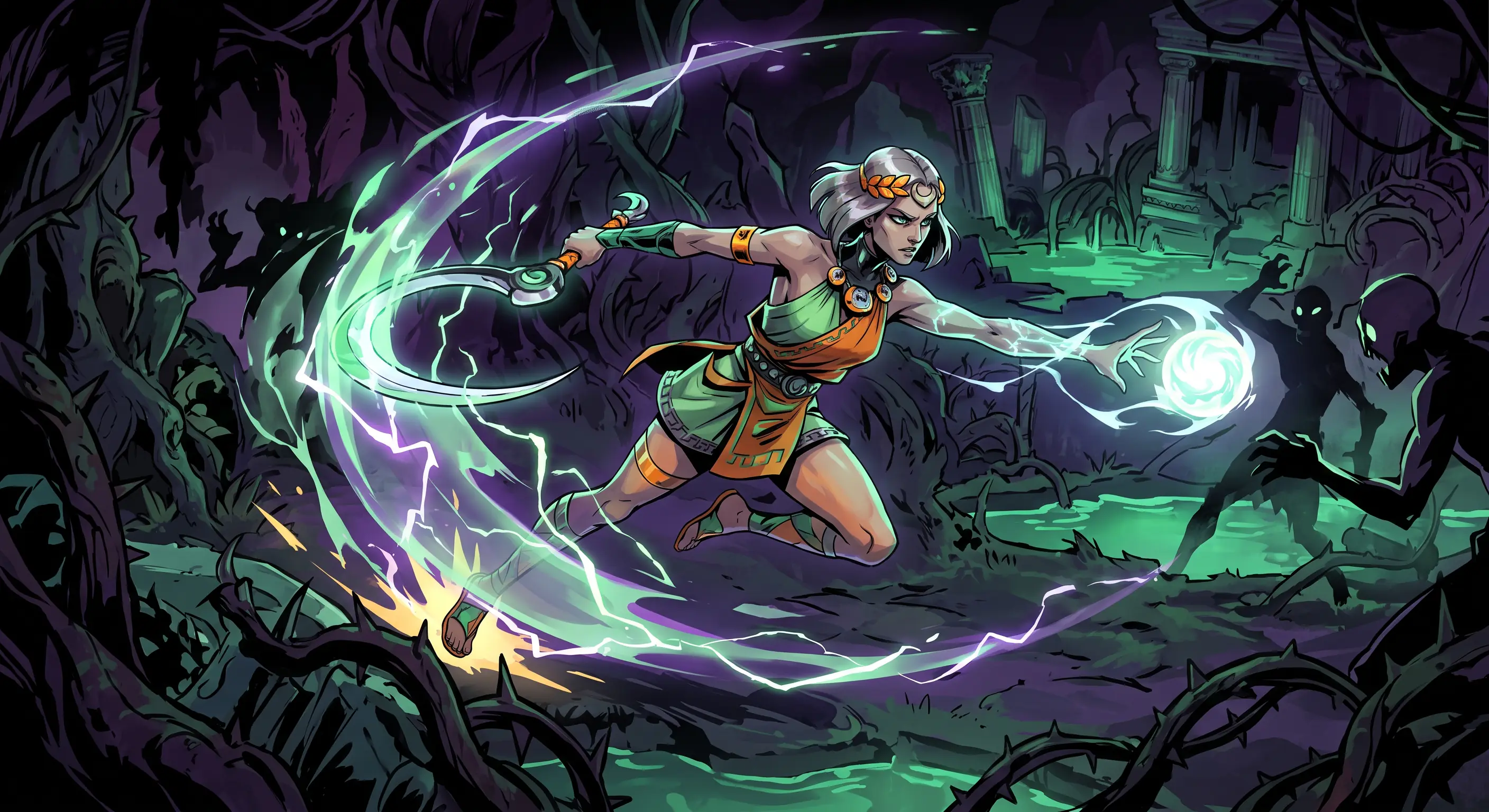
Hades II is a superb roguelike for players who want a run-based action game to reward improvisation without sacrificing character or consequence. Its best idea is not simply that Melinoë has more weapons, spells, and upgrades than Zagreus did. It is that each run can ask for a different tactical answer while the world around those runs keeps moving forward.
That makes the recommendation unusually straightforward. Play Hades II if you want demanding combat with room to shape a build, a story that treats repeated failure as part of the drama, and a deep post-game rather than a short victory lap. Be more cautious if an uneven mid-game difficulty curve or a large pile of resources sounds like friction rather than motivation. The current critical record is overwhelmingly positive, but it also identifies those caveats clearly.
Supergiant Games launched Hades II v1.0 on PC through Steam and the Epic Games Store on September 25, 2025. The developer's Launch announcement confirms that the finished release added the story's true ending, new character events, music, prophecies, and late-game unlocks. The official Steam page remains the practical place to check the live PC price, requirements, and store-specific details.
Combat is flexible without becoming shapeless
The central strength is how much expression Hades II finds inside a familiar top-down action loop. GamesRadar's PC review praises the mix of traditional attacks, dodges, Melinoë's crowd-controlling Cast, and blessings that can push one run toward a completely different rhythm than the next. GameSpot's review reaches a similar conclusion: the larger weapon, boon, keepsake, and familiar selection gives players meaningful levers to pull instead of making a bad run feel disposable.
That matters because roguelikes live or die on whether failure teaches something useful. The available criticism suggests that Hades II does not merely add more choices to a successful formula. It makes choices interact. A player can lean into positioning and control, build around a favored weapon, or adapt to whatever the gods offer. The result is a combat system with enough structure to learn and enough variation to keep a familiar route from becoming routine.
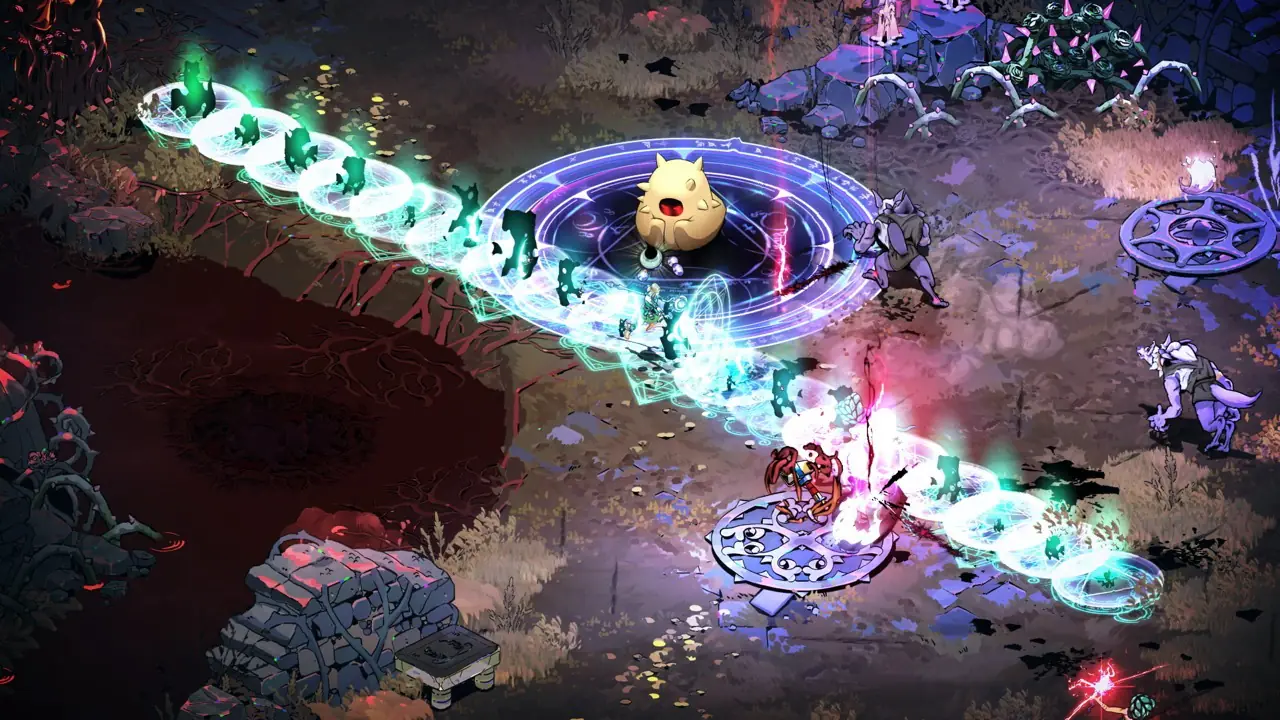
Image credit: GameSpot
The criticism is useful here, too. GamesRadar reports that some of the expanded toolset can feel less natural to use in the middle of a frantic fight, and that the difficulty curve can become frustrating before its systems click. That does not undermine the combat's quality; it defines the player fit. Hades II asks for attention and experimentation rather than offering the immediately readable momentum of a simpler action game.
Its characters make repetition feel like progress
The original Hades made death part of its storytelling. Hades II retains that advantage while widening the setting around Melinoë, the Crossroads, and the conflict with Chronos. GameSpot highlights the way character reactions can respond to weapons, boons, defeats, and relationships, while GamesRadar points to the care put into even smaller performances and cameos.
This is what separates the sequel from a merely polished combat roguelike. The same return to a hub can carry a new conversation, a new upgrade decision, or a narrative thread that makes another attempt feel purposeful. The story is not a reward held at the end of a grind; it is part of the reason to accept another failed run.
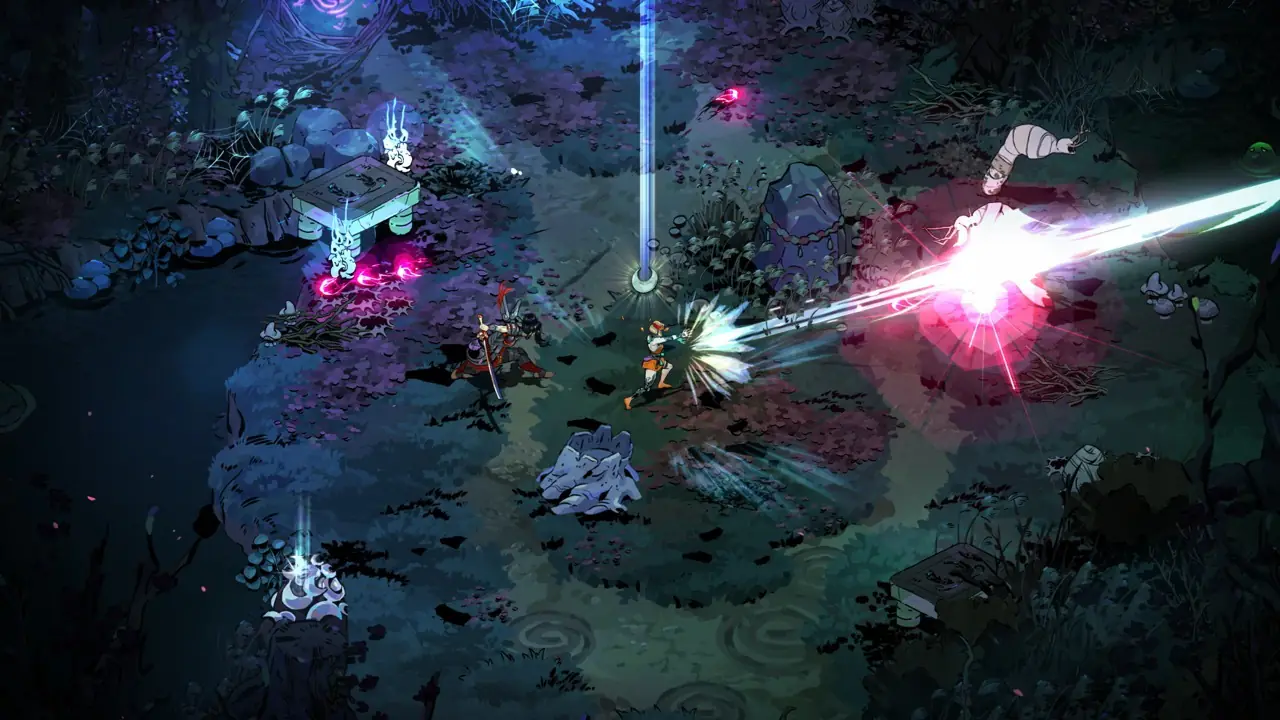
Image credit: GameSpot
The broader world also gives the sequel more room to breathe. GameSpot describes alternate routes, more varied biomes, and the Crossroads' growing set of activities, while Supergiant's v1.0 notes confirm that the release completed the main story and added further late-game material. For players who liked the first game's writing but wanted more reasons to stay after the credits, that scope is a genuine upgrade.
More progression is not always better progression
Hades II's main weakness is a consequence of the same ambition that powers its strengths. GamesRadar identifies a mid-game difficulty bump and a large collection of resources whose purpose is not always clear. The review argues that the game can occasionally feel as though its roguelike structure has been stretched to accommodate a much larger adventure.
That concern is worth taking seriously because progression shapes the pace of every run. A deep system is satisfying when each new material, card, or unlock sharpens a decision. It is less satisfying when players cannot tell whether they are pursuing a meaningful upgrade or simply waiting for the right resource. GameSpot is much more enthusiastic about the volume of build options and between-run development, so the disagreement is not about whether Hades II has depth. It is about whether all of that depth is equally elegant.
For a player choosing the next major action game, that trade-off is healthier than it sounds. Hades II is not trying to be a lightweight repeat of its predecessor. It is a larger, more demanding game that occasionally shows the seams of that expansion. If you want a shorter, duel-focused action experience instead, GoldCrit's Onimusha: Way of the Sword review covers a very different kind of combat commitment.
Who should play Hades II?
Hades II is for players who enjoy mastering a system over time, but it is also for players who need a reason to care about that mastery. Its combat earns the attention because its story, characters, and evolving world make another run feel like more than another attempt at the same boss.
The caveat is equally clear: players who dislike repeated runs, resource-heavy progression, or a difficulty curve that can demand patience should not expect the sequel to soften the genre's core contract. The game offers abundant tools, but it expects players to learn how and when to use them.
Final assessment
Review Verdict
Hades II is a superb sequel for players who want exceptional build-driven combat and a character-rich roguelike world, provided they can accept some uneven progression friction.
GoldCrit Score
The Good
- Build choices make combat feel adaptable instead of repetitive.
- Melinoë's story and the Crossroads give failed runs narrative momentum.
- The expanded world and post-game give dedicated players a real reason to stay.
The Bad
- The mid-game difficulty curve can feel harsher than the game teaches.
- Some combat tools are less intuitive in the middle of a hectic encounter.
- The resource economy can make progression feel more cluttered than necessary.
Independent reviews agree that the expanded weapons, boons, and tactical choices create an exceptional action loop.
Current reviews consistently praise the character writing, reactive structure, and larger mythological setting.
The broad upgrade surface adds long-term depth, though GamesRadar identifies resource clutter and an uneven mid-game curve.
Players who want a demanding, narrative-led roguelike have an excellent fit; players who dislike repeated runs may not.