Rise of Kingdoms is worth considering if you want a persistent strategy game built around historical civilisations, city development, commanders, a shared map, and alliance coordination. It is a conditional fit rather than a universal recommendation: official sources document the systems and store disclosures, but they do not establish a guaranteed beginner experience, spending outcome, population, or progression speed.
Rise of Kingdoms makes its case through the connection between historical civilisations, city development, commanders, a shared map, and alliance decisions.
That connection is the real buying question. Official sources document a broad persistent strategy loop, but they do not establish a guaranteed beginner experience, spending outcome, population, progression speed, or competitive fairness.
What Rise of Kingdoms actually asks you to manage
For the broader cluster context, see the Rise of Kingdoms game hub.
Civilisation, city, and commanders
Lilith’s current store description presents 15 historical civilisations, each with its own architecture, unique units, and special advantages. It also describes historical commanders whose abilities can be developed through skills and a talent tree. These are official product claims, not a recommendation to choose one civilisation or commander.
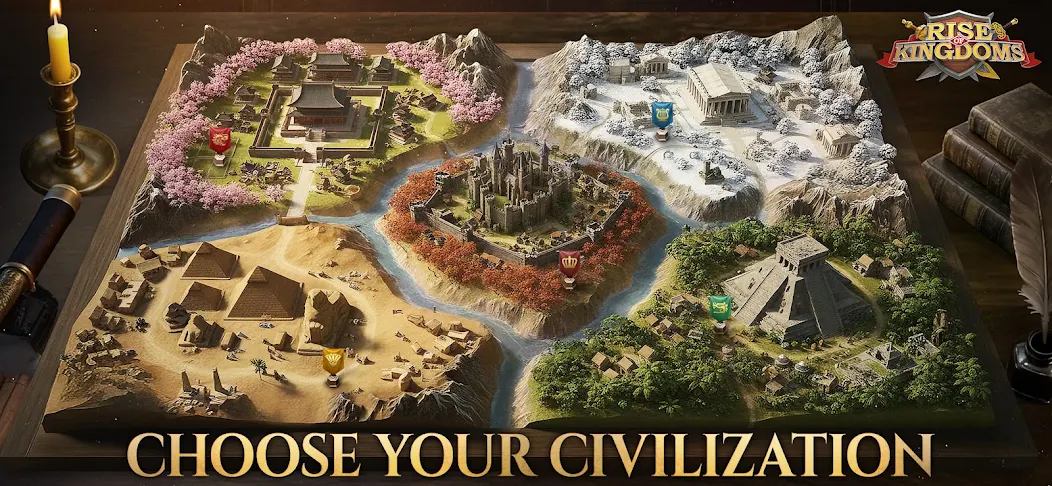
Image credit: Lilith Games - Rise of Kingdoms: Lost Crusade
For first-session orientation, use the Rise of Kingdoms beginner guide. It explains the early city and commander surfaces without turning them into a universal upgrade order.
Shared map, scouting, gathering, and troop movement
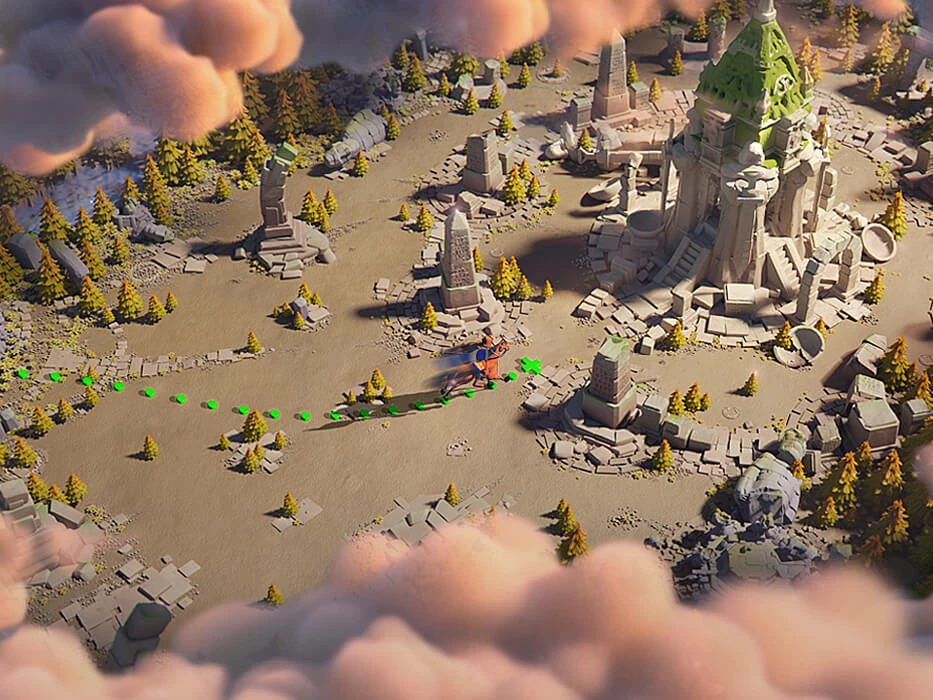
The official listing describes one large map containing players and NPCs, fog that scouts can uncover, resource gathering, natural obstructions, strategic passes, and troop movement that can be redirected during map activity. Lilith also describes real-time battles on that map.
Image credit: Lilith Games - Rise of Kingdoms
Those systems make the map a central part of the product’s identity. They do not establish a fastest route, a required march setup, or a universal target priority. For the focused system explanation, see the map, marches, and scouting guide.
Alliances and the social layer
Lilith documents alliance chat with built-in translation, officer roles, map indicators, territory expansion, and group achievements. That supports a meaningful cooperative layer in the product description. It does not prove that every player must join an alliance, that one alliance is best, or that alliance activity is equally accessible in every kingdom.
Read the Rise of Kingdoms alliances guide when alliance participation becomes your specific question.
Platforms, purchases, and what current sources confirm
The current Google Play listing identifies the app as Rise of Kingdoms: Lost Crusade, lists Android and Windows, and discloses ads and in-app purchases. The current US App Store listing identifies Rise of Kingdoms, lists iPhone and iPad, and discloses in-app purchases. Storefront access can vary by country; confirm the exact listing for your region before installing. No RoK account-linking or cross-save promise is made here.
The official site and store listing also show ongoing live-service updates, including recent event and season references. Those dated descriptions establish that the product changes over time, not that any specific event, reward, population, or balance state is permanent.
Who should put Rise of Kingdoms on their shortlist?
The strongest documented proposition is the combination of historical theme and connected map management. A player can move from city decisions to scouting, gathering, troop movement, commanders, and alliance coordination without those systems being described as isolated modes. That is why RoK can be a good fit for players who enjoy persistent strategic context and long-horizon choices.
This is an editorial evaluation of documented systems. It is not a claim that the game is easier, more active, more affordable, or more rewarding than another strategy title.
The same breadth can be a trade-off if you prefer a compact, self-contained strategy experience. Official sources do not provide a reliable measure of onboarding difficulty, daily time, grind, progression speed, server health, matchmaking, performance, or community quality, so those questions remain unknown rather than becoming negative scores.
The store purchase labels are worth noting before installation, but they only disclose monetisation features. They do not support a universal pay-to-win, free-to-play, or spending verdict.
The resulting 8.0/10 reflects Rise of Kingdoms as a fit for players who want its specific historical civilisation, city, shared-map, commander, and alliance combination. If that is your preferred strategy loop, this is a game worth trying. Consider another game if those systems are not your priority or if you need guarantees about spending, time, population, performance, or progression that current official evidence does not provide.
For a different persistent-strategy direction, compare the live games like Rise of Kingdoms alternatives. If Star Trek Fleet Command is the specific alternative you are weighing, use the Rise of Kingdoms vs Star Trek Fleet Command comparison.
Final assessment
Review Verdict
Rise of Kingdoms earns an 8.0/10 as a documented fit for players who want historical civilisation management, city development, commanders, a shared map, and alliance coordination in one persistent strategy game.
GoldCrit Score
The Good
- Historical civilisations and commanders give the game a clear identity.
- City development, scouting, gathering, troop movement, and map activity form a connected strategy surface.
- Alliance chat, roles, territory, and group objectives support a documented cooperative layer.
The Bad
- The persistent shared-world and alliance layers are central, so this is not a self-contained campaign.
- Current stores disclose ads and/or in-app purchases without establishing a universal spending outcome.
- Official sources do not prove progression speed, population, performance, or competitive fairness.
Official listings document city development, map actions, real-time battles, troop movement, and commander systems. This is a breadth assessment, not a difficulty or efficiency claim.
The documented shared map, fog, scouts, resources, civilisations, troops, and commanders create a substantial progression surface. Current sources do not establish speed or long-term balance.
Lilith documents alliance chat, roles, map indicators, territory, and group objectives. The score reflects documented feature depth, not community quality or activity.
Current official listings provide Android, Windows, iPhone, and iPad access paths and describe a clear map interface. They do not verify performance, device parity, or universal ease of onboarding.
Players who specifically want historical civilisation management plus ongoing map and alliance decisions have a strong documented fit. This does not claim retention or a required daily schedule.
Sources checked
- Rise of Kingdoms: Lost Crusade — Google Play — current title, Android/Windows listing, ads and in-app-purchase disclosure, game description, updated 20 August 2026; accessed 1 September 2026.
- Rise of Kingdoms — US App Store — current Apple listing, iPhone/iPad availability, in-app-purchase disclosure, and game description; accessed 1 September 2026.
- Rise of Kingdoms official site — official product positioning and live-service context; accessed 1 September 2026.