Valor Mortis has a simple way to separate itself from the Soulslike crowd: move the duel into first person, then make the player read a sword coming straight at them. One More Level builds around that shift with a rapier, firearms, supernatural powers, and acrobatic traversal in an alternate 19th-century Europe shaped by Napoleon’s wars. The official Valor Mortis page confirms that mix of first-person combat and a plague-ravaged historical fantasy.
The idea lands most clearly when combat becomes a patient exchange of attacks and parries. Across current reviews, that core earns real praise; the disagreement is about everything asked to support it. Traps, crowded encounters, scripted movement, and launch-era technical problems make the experience less consistent than its best fights. Valor Mortis is a good fit for players who want a different angle on the genre, but not an easy recommendation for anyone expecting every system to be equally polished.
Parrying gives the first-person view a purpose
The camera change is not novelty for novelty’s sake. TechRadar’s PC review calls the parry-focused combat snappy and satisfying, while noting that the close perspective can make some encounters clumsy. Destructoid’s review likewise praises the fluidity and pace of the parries. Together, those accounts point to the game’s strongest design choice: the view makes timing feel immediate, and a clean deflection can turn defense into a sharp opening for a counter.
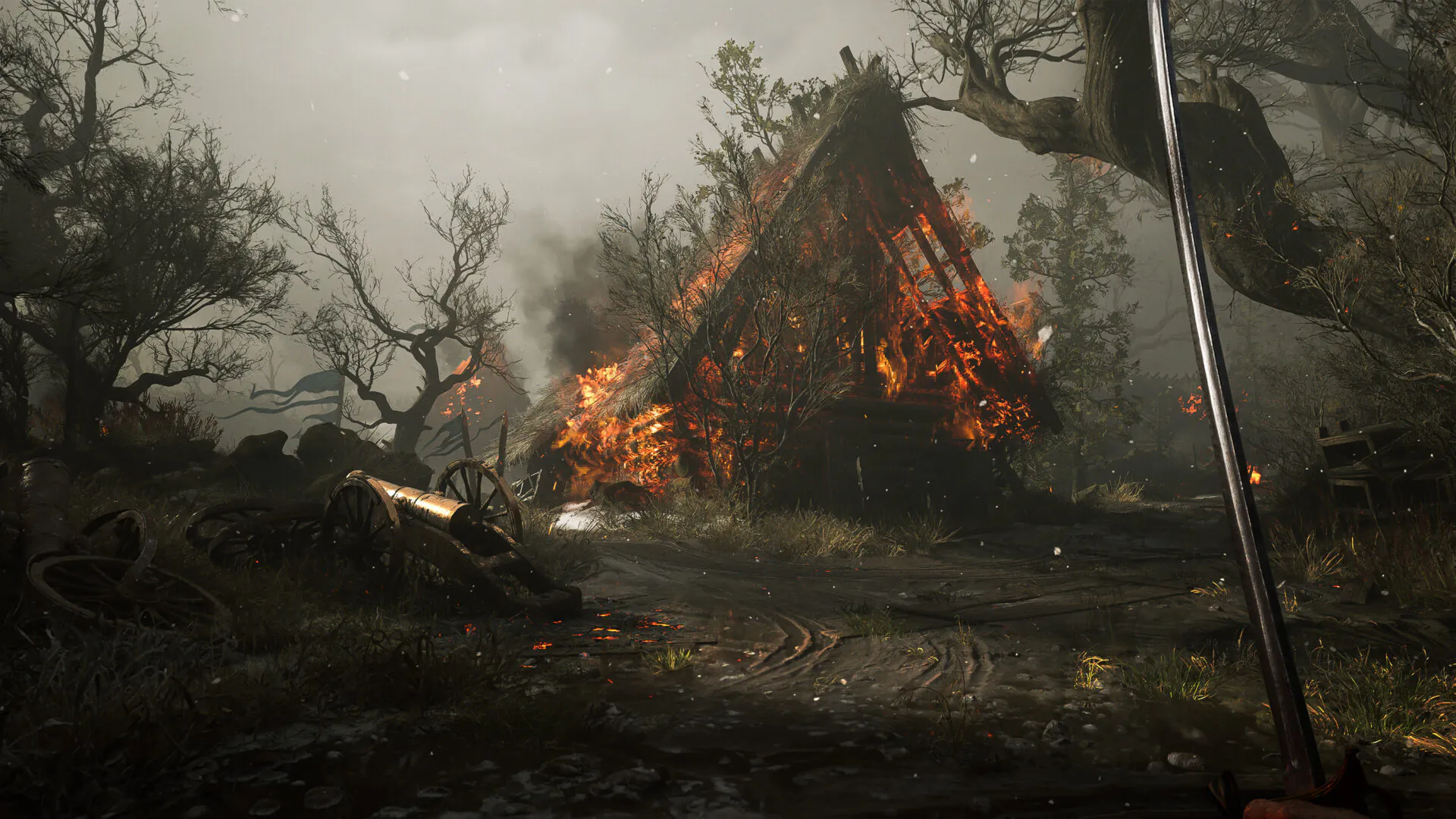
Image credit: One More Level — Valor Mortis
The rhythm is less reliable once several threats compete for attention. Shacknews’ review praises the challenge and satisfying parries, but describes distant projectiles and aggressive groups as a source of cheap-feeling deaths. TechRadar also warns that even two enemies can exploit the limits of the first-person view. That is a meaningful trade-off, not just a difficulty spike: when an attack comes from outside the player’s view, the game can punish awareness as much as timing.
A memorable setting, with movement that cuts both ways
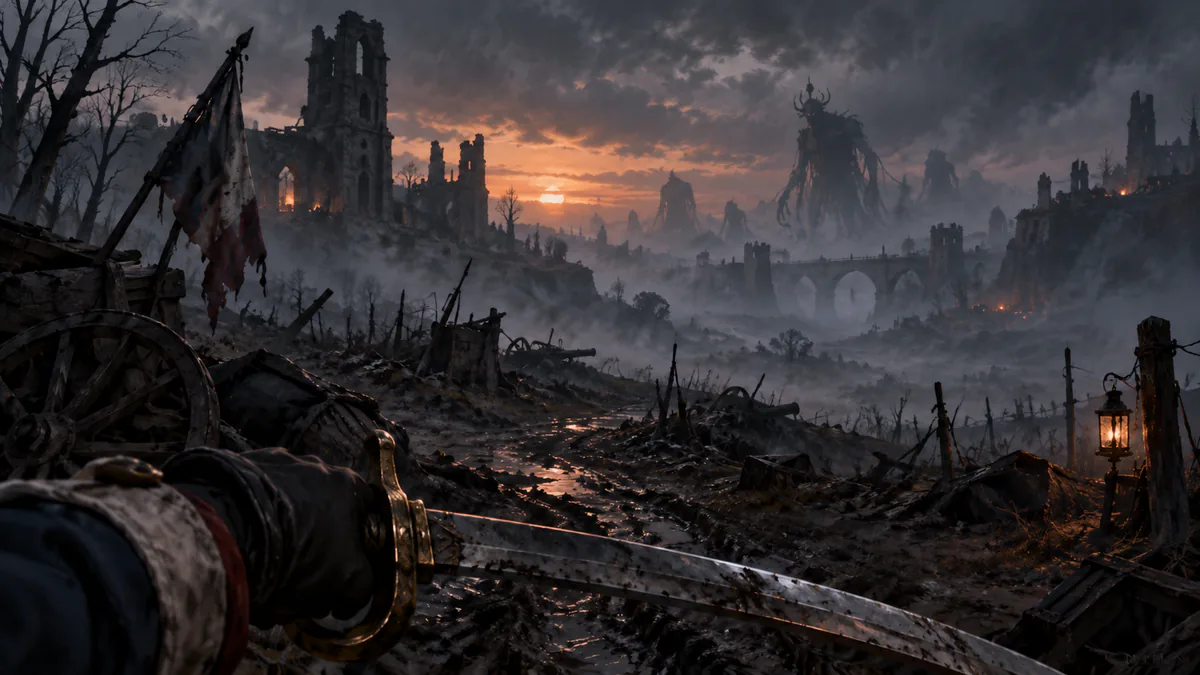
The Napoleonic horror backdrop gives the familiar checkpoint-and-progression structure a distinct identity. Destructoid highlights the alternate-history setting and its grotesque world, while Shacknews finds that One More Level’s experience with first-person action and acrobatics carries over into the new genre. The mixture of battlefield grime, supernatural threats, and mobility is a stronger hook than simply calling the game another Soulslike.
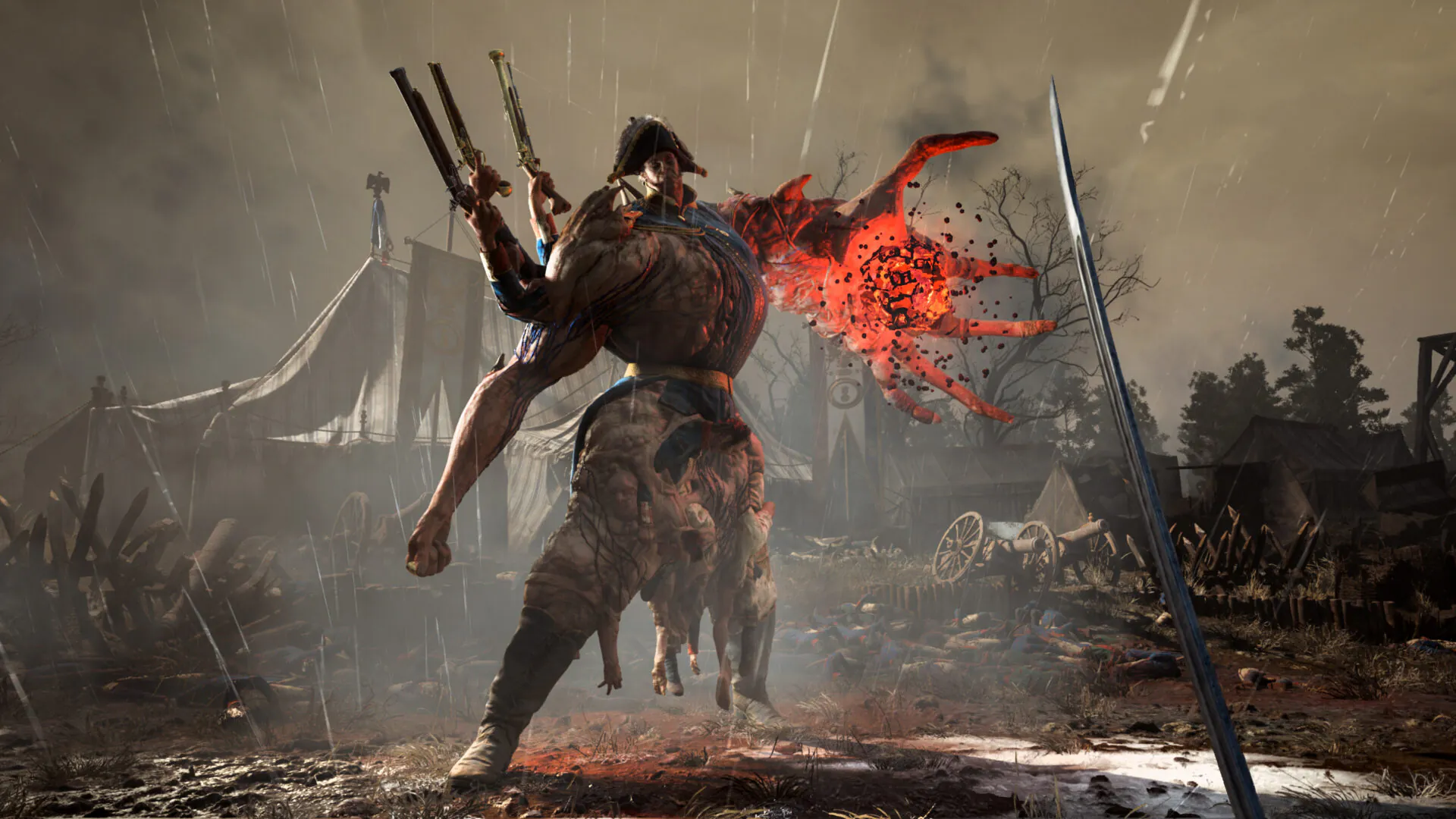
Image credit: One More Level — Valor Mortis
Traversal is where that studio identity both helps and complicates the adventure. Shacknews describes wall-running and grappling sequences as exhilarating additions; TechRadar also points to inventive set pieces. But GamesRadar’s review finds some scripted parkour frustrating, and TechRadar criticizes repeated traps and ambushes when they feel more like trickery than a fair test. These views are not contradictory: movement can be a highlight when a sequence gives the player room to improvise, then become a memory test when the route depends on guessing the script.
That unevenness lowers the ceiling of the world design. A grim setting and a few striking set pieces can make exploration worthwhile, but they do not automatically make every corridor, ambush, or platforming sequence compelling. Players who enjoy learning a demanding route may accept those rougher stretches; players who want the environment to stay readable during combat may find the interruptions harder to forgive.
PC performance needs current-build context
Some launch-review concerns should be read with their dates attached. GamesRadar’s PC review was published on October 12, before Valor Mortis launched on October 13, and reported crashes and unstable frame rates in its review build. On October 16, One More Level’s official patch notes on Steam said the first update fixed some of the most common crashes, added warnings for outdated GPU drivers, and reduced error logging. The developer also said it was continuing to investigate performance reports.
That update is useful evidence of follow-through, not proof that every PC configuration is now stable. The developer’s note does not quantify frame-rate gains or declare the remaining reports resolved. Check that the game is fully updated and look for newer system-specific reports if performance is a deciding factor; this review does not claim a GoldCrit benchmark on any PC setup.
Who should play Valor Mortis?
Valor Mortis is for Soulslike players curious about how parries, firearms, and supernatural abilities feel when the camera stays inside the duel. Its combat has a clear identity, and the setting gives the journey more character than a routine fantasy backdrop. The recommendation is conditional because encounter readability, scripted traversal, and uneven technical confidence can undercut the same strengths that make the game interesting.
For another recent action-game perspective, GoldCrit’s Onimusha: Way of the Sword review weighs a more traditional sword-duel structure. And for a different supernatural historical setting, see The Blood of Dawnwalker review. Valor Mortis is the more unusual camera experiment, but it is also the less consistent package of the two.
The bottom line is a 7/10: Good for players willing to learn its first-person combat and accept uneven stretches, while anyone prioritizing reliable PC performance or consistently fair encounters may want to wait for more updates. Its parries make the new perspective matter; the rest of the game does not always meet that standard.
Final assessment
Review Verdict
Valor Mortis is a worthwhile first-person Soulslike for players drawn to precise parries and its Napoleonic horror setting, provided they can live with uneven encounters and unresolved PC performance questions.
GoldCrit Score
The Good
- Parry-led first-person combat gives defensive timing a clear, satisfying payoff.
- The supernatural Napoleonic setting makes the game's world immediately distinctive.
- Wall-running and grappling create inventive movement set pieces when they leave room to react.
The Bad
- Groups and distant projectiles can exploit the first-person view, making some deaths feel hard to read.
- Scripted parkour, traps, and ambushes are uneven, interrupting the combat's stronger rhythm.
- The October 16 update addressed common crashes, but the developer says PC performance work is ongoing.
TechRadar and Destructoid praise the satisfying parry rhythm, while TechRadar also notes limits when close-range fights become crowded.
Independent reviews and the official description support a distinctive supernatural Napoleonic setting and a clear first-person identity.
GamesRadar and TechRadar find some scripted parkour, traps, and encounter pressure frustrating, limiting how consistently the core combat can shine.
The developer's October 16 notes confirm fixes for common crashes while stating that reported performance issues remain under investigation.