Phantom Blade Zero has a clear answer to the question facing any new action RPG: what makes its fights worth learning? Its weapon-switching system ties defense to offense, while a vast arsenal gives players room to shape each encounter. Across several independent reviews, the combat is the game’s most consistent strength. The qualification is just as useful: its story can lose focus, ordinary fights do not always match the intensity of the bosses, and the official PC targets ask a lot from a $59.99 release.
That mix makes S-GAME’s wuxia adventure an easy recommendation for players who want expressive melee action, but a more conditional one for anyone expecting an equally compelling narrative or a relaxed PC setup. The evidence points to a game whose highs are unusually strong and whose rougher stretches are hard to ignore.
Assessment method: This is a research-based editorial assessment, not a GoldCrit hands-on test. We compared the named reviews for combat, exploration, and storytelling, checked the official store information, and examined separately attributed PC testing. The 8/10 is GoldCrit’s qualitative judgment of that evidence, not an average of other outlets’ scores. We have no GoldCrit test rig, playtime log, or original frame-time capture to report. Console impressions inform the design discussion; they do not establish PC performance.
Weapon switching gives the combat a real rhythm
The arsenal is more than a collection of new animations. You can equip two primary weapons and swap between them during a fight; reviewers describe that switch as a way to replenish Sha-Chi, the resource drained by sustained blocking and heavy attacks. The result is an unusual loop: defend or commit to a heavier strike, change weapons when the meter runs low, then use the opening to press forward again. That gives loadout decisions a live role instead of leaving them in a menu.
GamesRadar’s PC review and Push Square’s PS5 Pro review both praise the combat’s feel and weapon variety, while VGC’s review highlights the pace and the interplay between parries, dodges, and attacks. Their platform contexts differ, but the shared point is mechanical rather than visual: the game keeps asking the player to make small decisions inside a fast exchange.
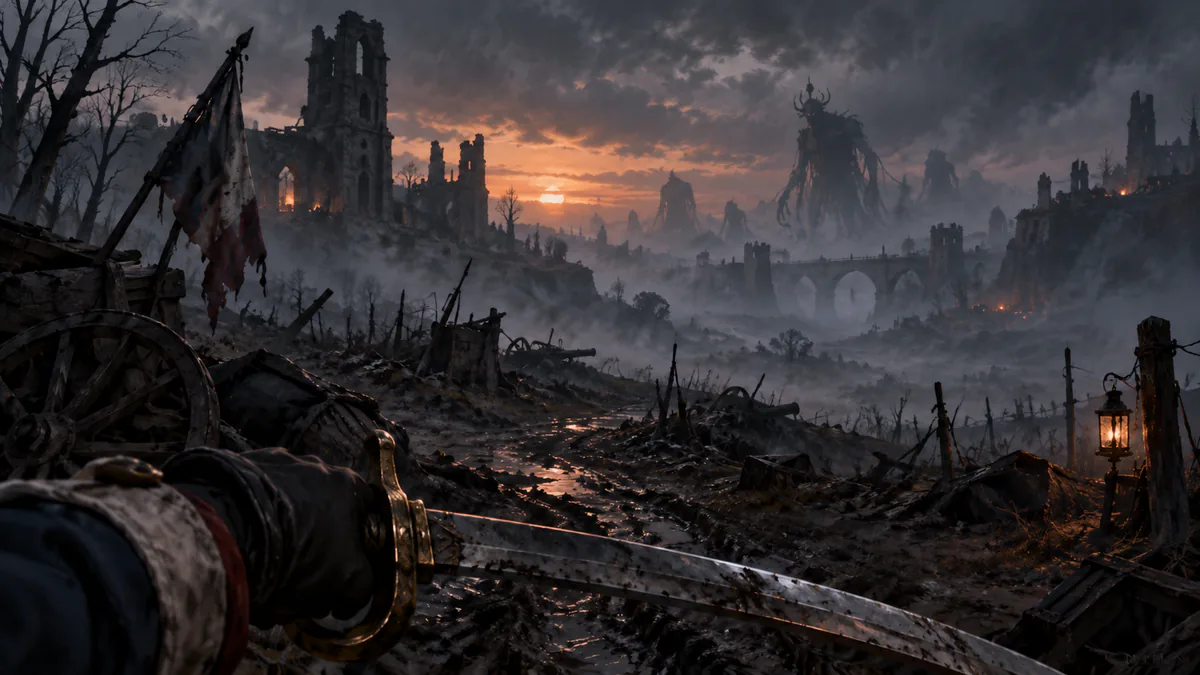
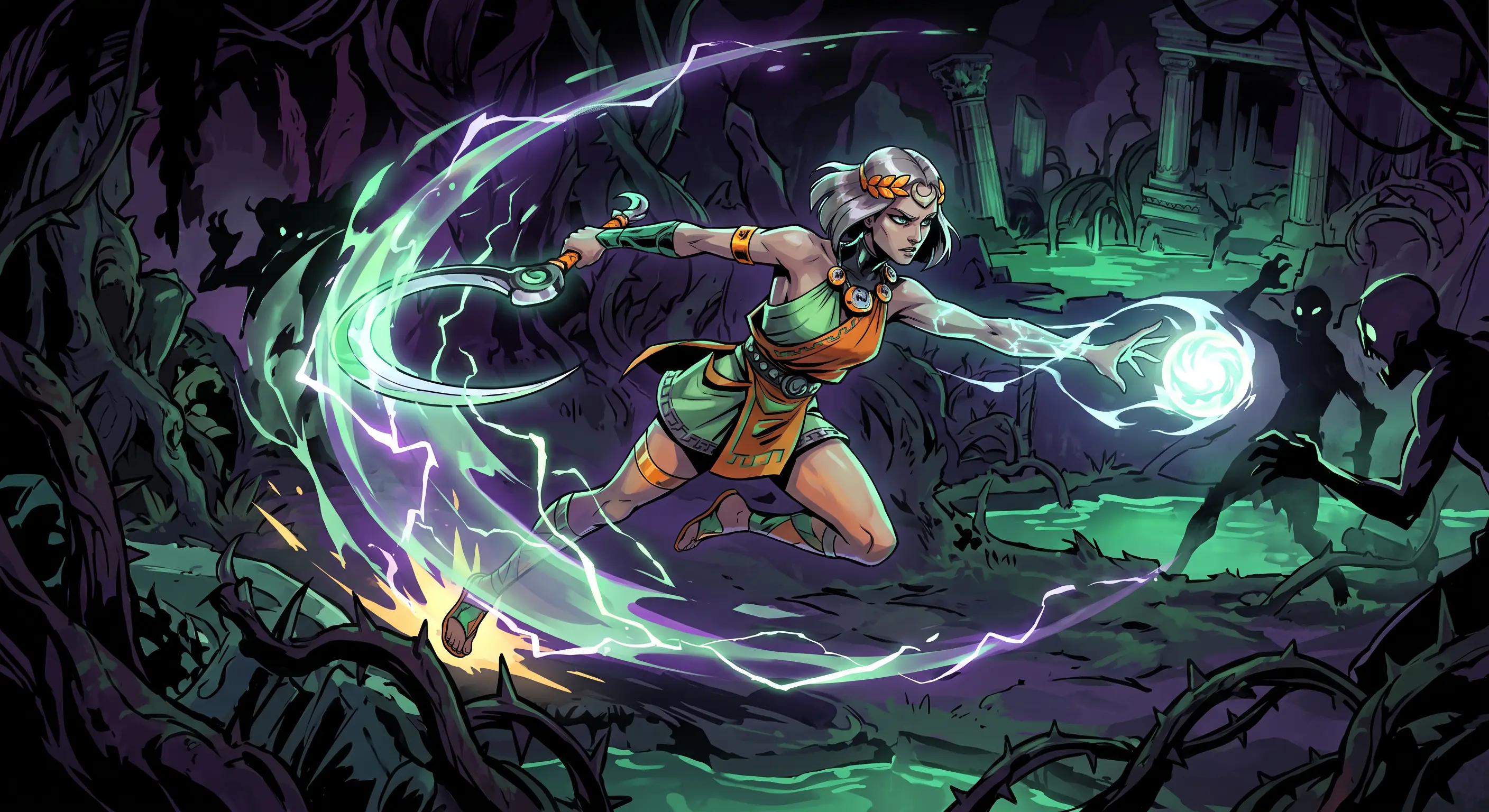
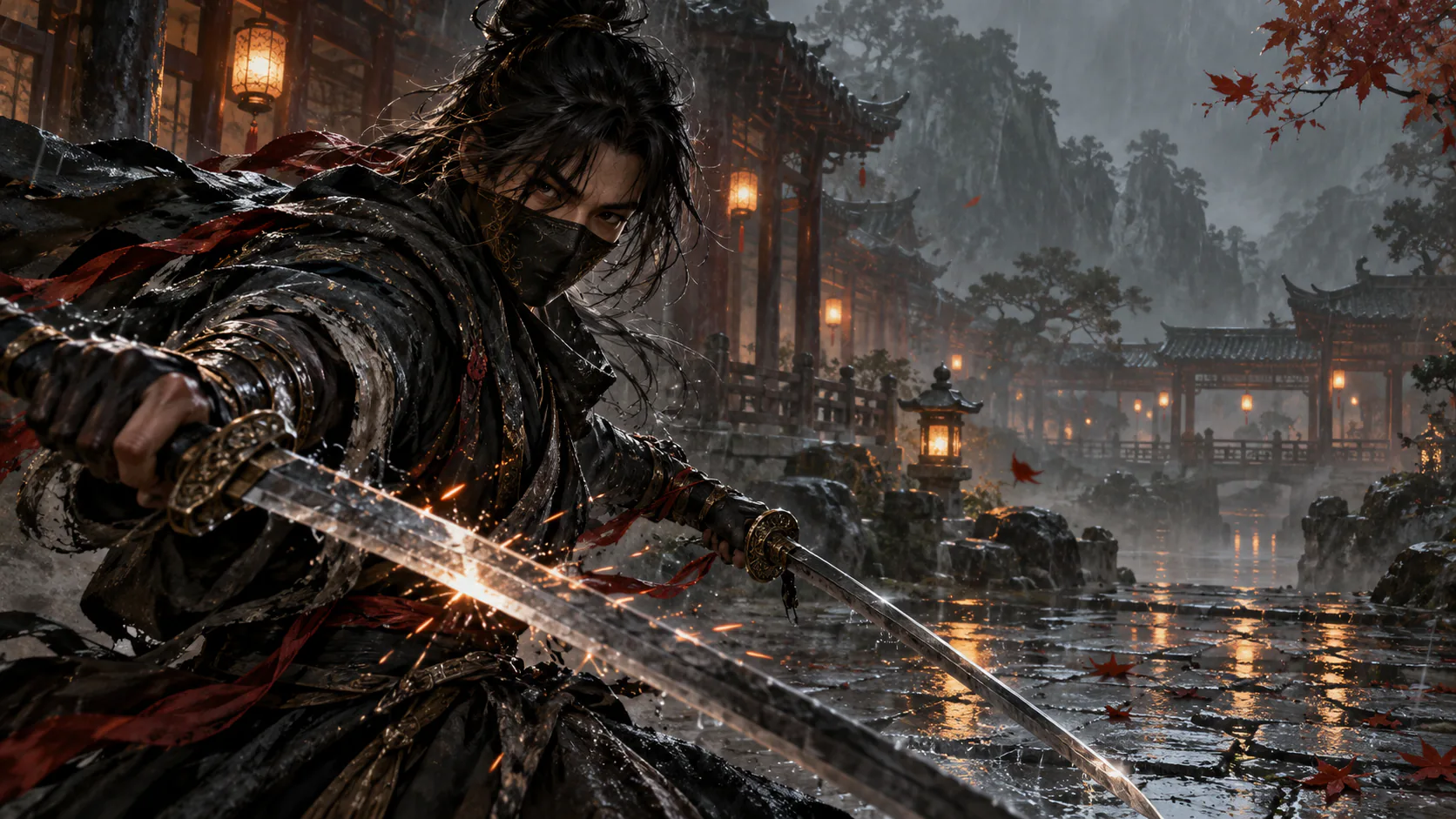
The two gameplay images below come from S-GAME’s Official Media Hub.
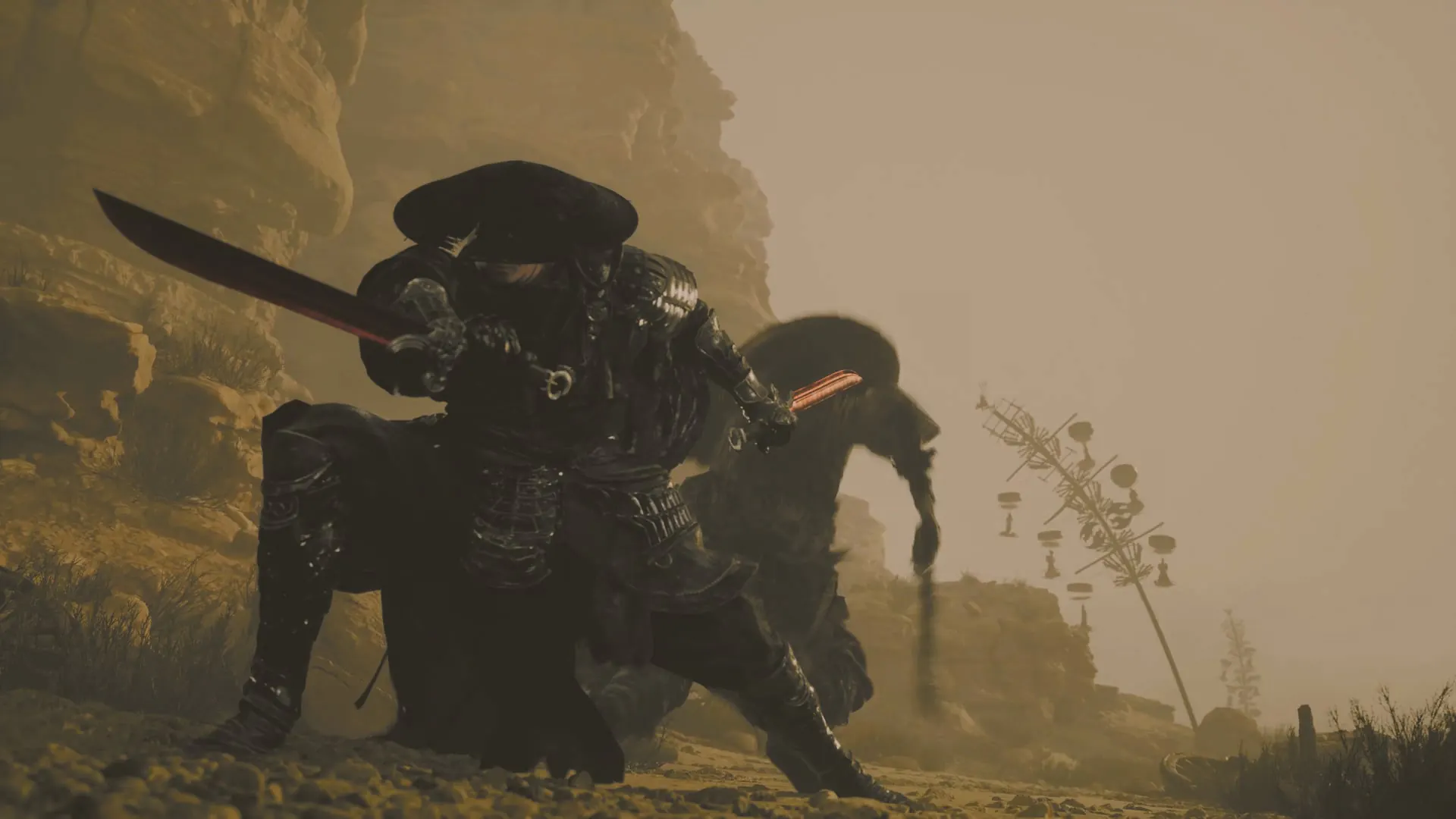
Image credit: S-GAME — Phantom Blade Zero
The official Steam listing advertises more than 30 primary weapons and more than 20 Phantom Edges, the limited-use tools that add another layer to a build. That scale matters because it gives the combat room to change over a full-length adventure. It also creates a practical expectation: players who enjoy trying new movesets and adjusting equipment have more to engage with than players who prefer settling on one reliable weapon and repeating a fixed combo.
The game is not simply a Soulslike with faster animations. S-GAME frames it as a blend of wuxia, fantasy, and folk horror, and GamesRadar explicitly distinguishes its structure from the genre’s familiar conventions. That distinction matters for players looking for a specific kind of challenge. Phantom Blade Zero leans on timing, weapon choice, and boss patterns, but its own identity comes from a more theatrical martial-arts rhythm than from reproducing a familiar stamina-and-checkpoint formula.
Bosses are a highlight; the difficulty curve is less even
The strongest fights appear to make good use of the combat system. TechRadar’s review describes inventive boss encounters and weapon variety as highlights, and VGC also emphasizes the bosses’ distinct attacks and the value of learning their patterns. GamesRadar praises the breadth of encounters and hidden bosses, though it notes that some optional fights represent a sharp jump in difficulty.
That last point matters because the challenge is not described as a smooth climb. TechRadar found many common enemies comparatively easy outside a handful of exceptions, while GamesRadar reports especially punishing secret bosses later in the adventure. These are individual reviewers’ experiences rather than a universal difficulty rating, but together they suggest a lopsided curve: routine enemies may not always test the system, while certain bosses can demand a sudden step up in patience and execution.
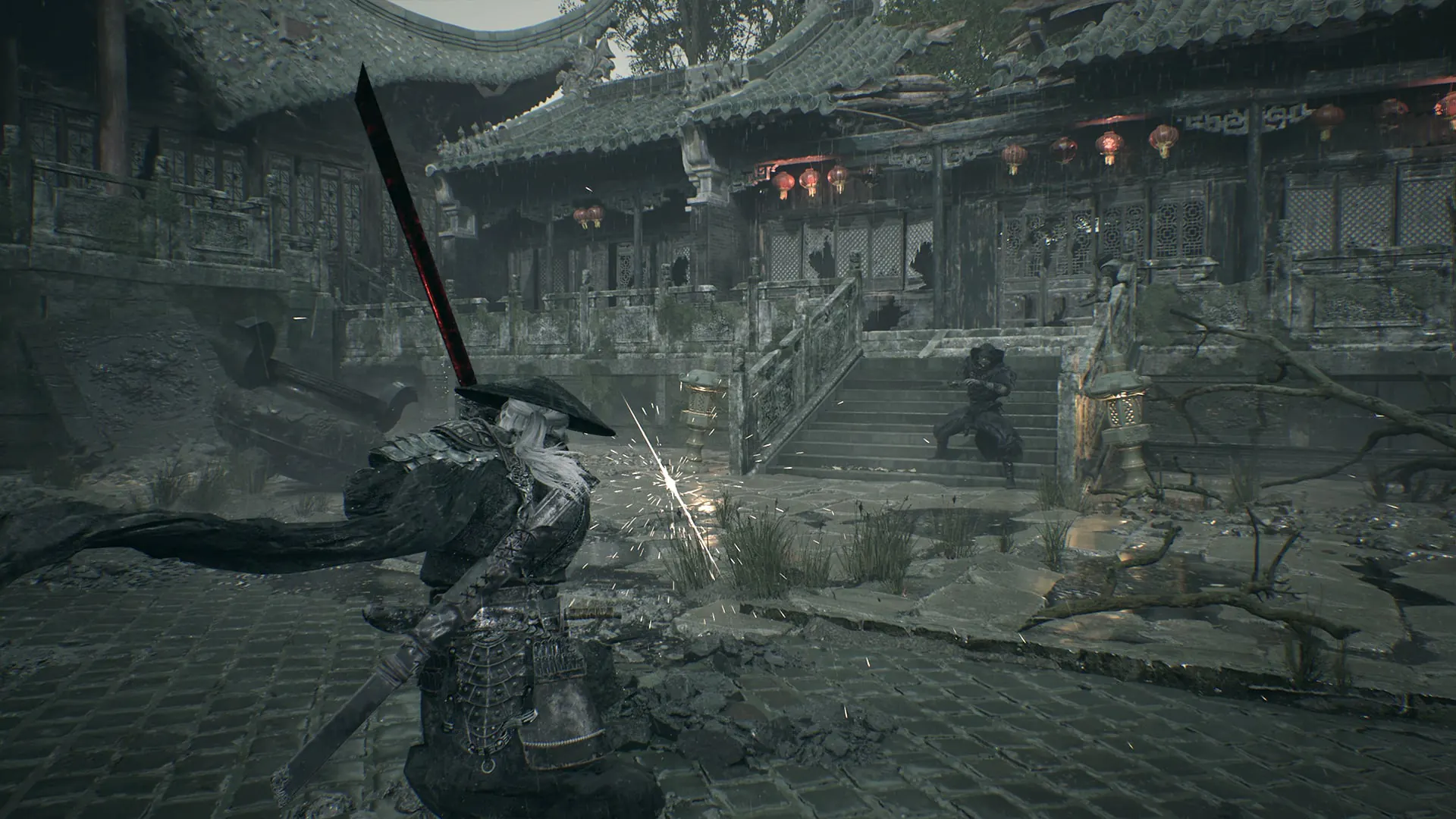
Image credit: S-GAME — Phantom Blade Zero
For players who like studying a boss and adapting a weapon setup, that contrast can be a feature. For those who expect every encounter to build steadily on the previous one, it may feel uneven. The game seems most persuasive when an enemy’s moveset encourages the player to use the full combat vocabulary; less demanding encounters have less room to show why all those systems matter.
A vivid world, with a story that asks for patience
The setting helps the adventure stand apart. The Official S-GAME site describes the game through wuxia, fantasy, folk horror, and its own “kungfupunk” label. GamesRadar and TechRadar both praise the atmosphere and the varied environments, while GamesRadar also finds that exploration can reward detours with hidden fights and weapons. The world is not just backdrop for the swordplay: it gives the action a strange, martial-fantasy character that is more specific than a generic medieval setting.
Exploration is a point of disagreement rather than a settled strength. GamesRadar praises the layout and hidden rewards, while VGC’s PC review finds the level design linear and uninspired. Optional weapons and fights do not necessarily make the connecting routes interesting. GoldCrit’s recommendation rests more firmly on combat variety than on an expectation of expansive exploration.
The story is less consistently effective. GamesRadar describes the storytelling as uneven and says the volume of notes and Memory Flowers can interrupt an action-focused pace. TechRadar likewise flags story clarity and occasional pacing slumps, and Push Square raises concerns about flashbacks and collectibles slowing the adventure. The shared criticism is not that the premise is impossible to follow; it is that its delivery can ask for more attention than the action around it earns.
Soul’s 66-day lifespan is a dramatic premise, not a ticking real-time clock. GamesRadar reports that in-game time advances at specific story beats rather than continuously. That is a useful distinction for players who might otherwise feel pushed to rush through optional areas: the premise supplies narrative pressure without making ordinary exploration a race against a timer.
What PC players should check before buying
Published targets are not measured performance
The PC requirements deserve a look before the opening cinematic does. Steam lists 16 GB of memory and an SSD installation with 145 GB available. Its minimum configuration names a Core i7-8700K or Ryzen 5 3600 and a GTX 1660 6 GB or Radeon RX 5500 XT 8 GB, with a stated target of 1080p at 30 frames per second using upscaling. The recommended tier moves to an RTX 3060 Ti 8 GB or RX 6700 XT 12 GB and lists a 1440p, 60-fps target with upscaling.
Those figures are the store’s published targets, not a guarantee for every system or a GoldCrit benchmark. They do make the buying decision more concrete: check that the SSD has room, compare your GPU to the listed tiers, and decide whether the stated minimum output is acceptable before paying full price. Steam lists the Standard Edition at $59.99 at the time of this review. For the game’s current requirements and any changes, use the live Steam page.
PC performance and action-game expectations
What independent PC testing adds
DSOGaming’s PC analysis tested the opening area with a Ryzen 9 7950X3D and 32 GB RAM. With path tracing, its RTX 5090 delivered 25–27 fps at native 4K with TSR, versus 54–60 fps using DLSS Quality before frame generation. These are that outlet’s results for its test configuration, not a forecast for your GPU or the whole campaign. Its report also says there is no built-in benchmark.
The useful buying distinction is between output resolution, internal rendering resolution, and generated frames. A 4K output using upscaling is not a native-4K workload; a higher displayed frame rate with frame generation does not establish the same underlying rendering rate. Check all three when comparing videos or charts. Begin with a conventional rendering configuration and establish responsive combat before spending the remaining GPU budget on ray or path tracing.
Which action-game expectations fit?
GameSpot’s hands-on preview compared its combo-focused action more closely with Ninja Gaiden than with Souls games. That was a 2024 demo impression, not a review of the final build. The final-game evidence above supports the useful part of that distinction: approach fights as a system of weapon switches and openings, rather than assuming a familiar Souls-style rhythm will transfer unchanged. Players drawn to Sekiro’s defensive timing should weigh that shared interest against the different emphasis on two-weapon experimentation.
Before buying, check recent reports for your GPU, driver, resolution, and graphics settings together. Prioritize boss footage and frame-time consistency over a peak fps counter. If your interest is mainly the story, the repeated pacing reservations deserve more weight than our overall score. If your interest is combat, the strongest evidence favors learning weapon interactions and exploring for alternatives. Neither recommendation requires treating demanding graphics presets as mandatory.
Verdict: a superb action game with visible trade-offs
Phantom Blade Zero is at its best when weapons, defense, and boss patterns turn a fight into a sequence of choices rather than a blur of effects. Multiple independent reviews converge on that strength, and the official arsenal figures help explain why the combat has room to stay interesting. The world adds a memorable identity, and exploration can pay off for players willing to look beyond the next objective.
The recommendation is less straightforward if narrative clarity, a consistently rising challenge, or modest PC requirements matter as much as combat. Those are not minor footnotes: they shape how the adventure feels between its best duels and whether a given PC meets the game’s own performance targets. For a different take on recent sword-focused action, GoldCrit’s Onimusha: Way of the Sword review looks at a more deliberate duel structure; our Valor Mortis review considers a first-person approach to parries and encounter pressure.
The overall 8/10 — Great reflects a standout combat foundation and strong world identity, tempered by uneven storytelling, a less consistent encounter curve, and demanding published PC targets. If learning weapons and reading boss patterns are the reason you play action games, Phantom Blade Zero makes a compelling case. If the story or a guaranteed smooth PC experience is the deciding factor, check current system-specific reports before buying.
Final assessment
Review Verdict
Phantom Blade Zero pairs exceptional weapon-switching combat with a vivid wuxia world, but uneven storytelling, an inconsistent encounter curve, and demanding PC targets make its recommendation strongest for action-first players.
GoldCrit Score
The Good
- Weapon swapping gives defense, resource use, and offense a distinct rhythm.
- A broad arsenal and varied Phantom Edges support experimentation across fights.
- The wuxia-fantasy world and exploration give the action a memorable identity.
The Bad
- Storytelling and pacing can become uneven, especially around lore-heavy collectibles.
- Routine enemies and some optional bosses produce a less consistent difficulty curve.
- The published PC minimum targets 1080p/30 with upscaling and requires substantial SSD space.
GamesRadar, TechRadar, Push Square, and VGC independently praise the weapon variety and combat feel; the official store listing confirms a broad arsenal.
Reviews praise distinctive bosses and patterns, while TechRadar's easier common enemies and GamesRadar's sharp optional difficulty spikes show uneven pressure.
GamesRadar and TechRadar praise the atmosphere and varied environments; GamesRadar also reports useful rewards for exploring off the main route.
GamesRadar, TechRadar, and Push Square each identify story clarity, pacing, or lore-heavy collectibles as notable weaknesses.
Steam's $59.99 listing, 145 GB SSD requirement, and upscaling-based minimum target make the PC commitment substantial; the published targets are not guarantees for every system.